
10 Things Adults with ADHD Want You to Know

Here’s what adults with ADHD wish everyone understood about their unique experiences.
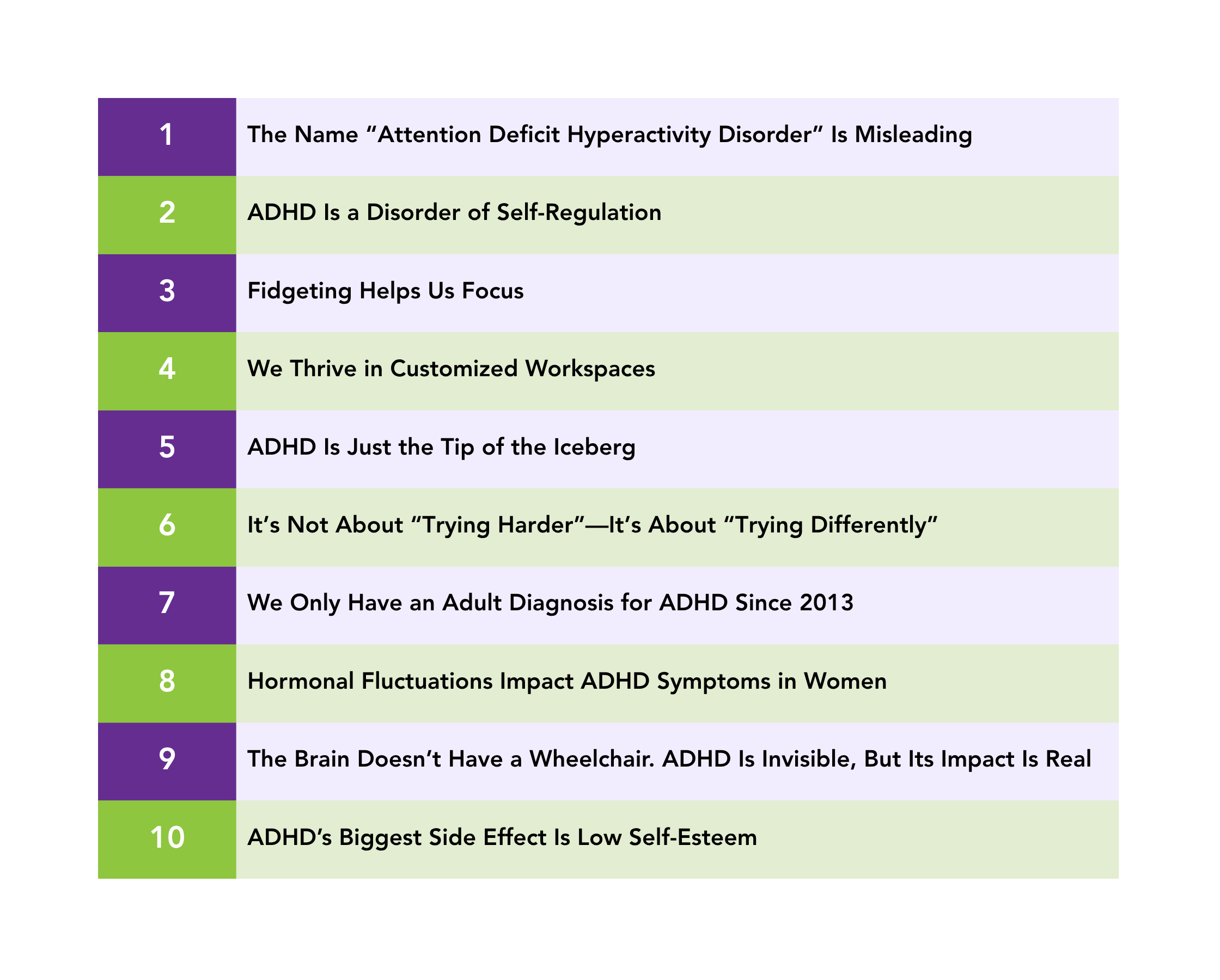
1. The Name “Attention Deficit Hyperactivity Disorder” Is Misleading
The term ADHD doesn’t accurately describe the condition. According to experts like Dr. Edward Hallowell and Dr. John Ratey, people with ADHD don’t have a deficit of attention—they have variable attention. When something is exciting or engaging, they can hyperfocus intensely. When a task is boring or complex, attention wanes quickly.
Dr. Hallowell has proposed renaming ADHD to Variable Attention Stimulus Trait (VAST) to better capture the nature of this condition. ADHD isn’t an intelligence deficit—it’s a difference in how attention is regulated.
To sum it up, no one wants to be diagnosed with something that has the word “deficit” in it. ADHD is not an intelligence deficit! Explore Dr. Hallowell’s book, ADHD 2.0 to learn more.
“A deficit disorder puts ADHD into the realm of pathology or disease. People with ADHD don’t have a disease or a deficit of attention. We have a great deal of attention, but the problem is controlling it.”
- Edward Hallowell, MD and John Ratey, MD.
2. ADHD Is a Disorder of Self-Regulation
At its core, ADHD is about challenges with self-regulation, rooted in neurobiology. This includes struggles with hyperactivity, impulsivity, inattention and executive functioning. These challenges can affect everyday activities like managing time, emotions, energy and transitions.
ADHD impacts nearly every area of life, from sleep and medication routines to planning, organizing and navigating sensory issues.
3. Fidgeting Helps Us Focus
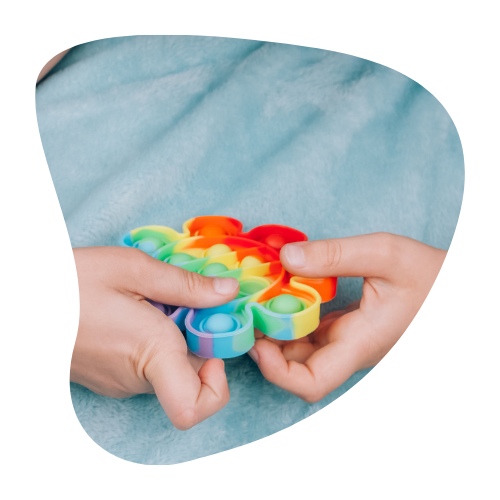
Fidgeting isn’t just a quirk—it’s a self-regulation tool. According to Dr. Roland Rotz, fidgeting stimulates an under-aroused brain by increasing dopamine and norepinephrine levels, which improves attention and cognitive function.
Tools like standing desks, exercise balls, Hokki stools and fidget spinners can make a big difference, especially during challenging tasks.
Learn more in the book exercise balls
“Fidgeting helps people with ADHD focus, by providing stimulation to an under-aroused brain. This stimulation increases two important neuro-transmitters, or brain chemicals, dopamine and nor-epinephrine. Fidgeting is an important self-regulation tool that increases attention, improves cognitive function and reduces boredom.”
- Roland Rotz, PhD.
4. We Thrive in Customized Workspaces
Adults with ADHD work best in environments tailored to their sensory preferences. Questions to consider:
Do you focus better in bright, dim, or natural light?
Does background music help, or do you prefer silence?
Do visual distractions hinder your focus?
For some, working with a “body double” or using tools like study carrels and whiteboards can enhance productivity.
5. ADHD Is Just the Tip of the Iceberg
ADHD rarely exists alone. Common co-occurring conditions include anxiety, depression, sensory issues, sleep disorders and executive functioning challenges. What you see (hyperactivity, impulsivity, inattention) is only a fraction of what adults with ADHD experience.
6. It’s Not About “Trying Harder”—It’s About “Trying Differently”

Most adults with ADHD have spent their lives working hard, but traditional approaches don’t always work. Tools like breaking tasks into smaller steps, using mind mapping or leveraging assistive technologies like speech-to-text apps can make a big difference.
"We’ll get to the finish line, but we’ll do it in a way that works with our unique brain wiring."
- David Flink (Why Just Try Harder is a Myth,www.understood.org)
7. We Only Have an Adult Diagnosis for ADHD Since 2013
The DSM-5 was the first diagnostic manual to include ADHD criteria for adults. Many adults are only now being diagnosed, allowing them to access better treatment and reduce stress.
8. Hormonal Fluctuations Impact ADHD Symptoms in Women
For women with ADHD, hormonal changes—such as those during ovulation, perimenopause and menopause—can worsen symptoms. Estrogen impacts neurotransmitters like dopamine, which affects executive functioning (ADHD and Hormones.).
Clinicians often adjust medication during hormonal shifts or transitional life stages to help women manage ADHD symptoms (Those Lovely ‘Mones, the Intersection of ADHD and Hormones).
“We now know that the brain is a target organ for estrogen, where it effects cognition, mood and sleep”
- Dr. Ellen Littman
9. The Brain Doesn’t Have a Wheelchair. ADHD Is Invisible, But Its Impact Is Real
ADHD is a documented neurodevelopmental disorder that affects brain structure, function, and chemistry. Though you can’t see it, the struggles are real, from procrastination to difficulty following through on tasks.
Understanding where ADHD shows up and learning strategies to manage it is key. "It’s not our fault, but it is our responsibility," as the saying goes. Self-advocacy and education are essential.
10. ADHD’s Biggest Side Effect Is Low Self-Esteem
Many adults with ADHD have faced a lifetime of negative feedback: “You’re smart—why can’t you just apply yourself?” These repeated struggles often lead to shame and self-doubt.
One common challenge is Rejection Sensitive Dysphoria (RSD), which causes intense emotional pain from perceived rejection or failure. It’s neurological, not just being “oversensitive.” It is estimated that up to 70 % of adults with ADHD experience RSD (Rejection Sensitive Dysphoria, ADHD and Emotional Dysregulation)
Despite these challenges, getting support and focusing on strengths can create new patterns of success. Dr. Hallowell emphasizes doing what you do best and seeking help for the rest. When you embrace ADHD and seek support, "ADHD gets smaller, and your life gets bigger."
Take Control of Your ADHD
You don’t have to navigate ADHD alone. Strength-based strategies and tailored support can make all the difference.
For help managing ADHD and building a life that works for you, schedule a free consultation.