
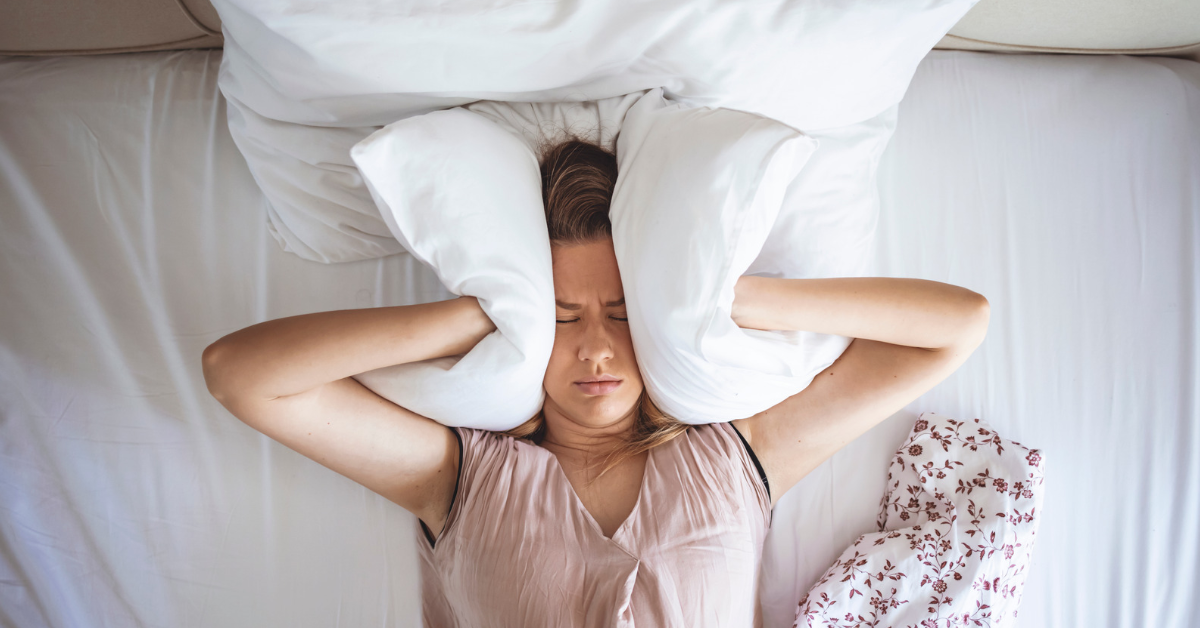
It’s getting late, but the house is quiet and you need to get a few more things done before bed. You want to relax a little too, after all you need some down time! You scroll while watching Netflix and before you know it, it’s 2AM.
You are exhausted from a long day and can’t wait to get to bed. You get in bed but you can’t shut off your brain. You’re getting more frustrated by the minute. You’re wired and tired.
The alarm rings and you hit snooze three times. You feel half dead. You sit by the side of the bed and try to muster the energy to get up. The clock is ticking. It’s going to be a long day and now you’re running late!
Did you know that 80% of adults and 82% of children with ADHD experience insomnia or sleep disturbances? That is double the rate of the general population!
Here is the paradox: Poor sleep worsens daytime ADHD symptoms, and ADHD symptoms make it harder to fall asleep!
People with ADHD are challenged in four ways:
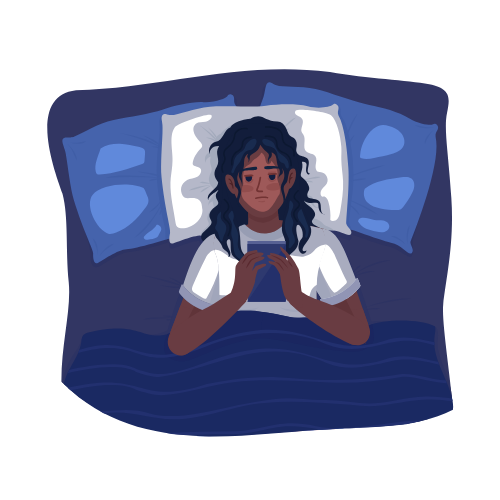
Bedtime Procrastination. We tend to be night owls with our biological clocks running up to two hours later. We stay up late doing stimulating activities like gaming or scrolling. Our natural rhythm doesn’t mesh with the typical work or school schedule and we are chronically sleep deprived.
Falling Asleep. We may struggle with insomnia, have racing thoughts and a brain that never quits as soon as our head hits the pillow. Overthinking, ruminating and worry plague us. We are mentally restless. Our minds are alert when they should be winding down.
Staying Asleep. Restless legs keep us awake or we thrash around making it hard to settle down. If you are a woman in menopause or peri-menopause, you may experience wakefulness and hot flashes.
You may have a breathing issue like Sleep Apnea that is linked to your airway not staying open enough during sleep.
Add to this the co-existing conditions that most people with ADHD experience, such as anxiety, depression or restless legs syndrome.
According to research
Research published in December of 2025 by Brandon Luu and Nicholas Fabiano, “ADHD as a circadian rhythm disorder: evidence and implications for chronotherapy”, suggested a strong link between ADHD and circadian rhythm dysfunction. It is unclear whether circadian issues contribute to ADHD or are the result of it, but a delayed body clock can make ADHD symptoms worse.
In addition, it showed that the irregular release of melatonin in adults with ADHD delayed sleep by roughly 90 minutes.
Thomas Brown, PhD a longtime researcher of ADHD, was one of the first to give attention to sleep in children and adolescents with ADHD citing the arousal and alertness in ADHD itself contributed to sleep problems. Anyone who has tried to wake up a teenager from “the sleep of the dead” can attest to this! In recent research, 50-70% of children with ADHD reported sleep problems including bedtime resistance (don’t we know it!).
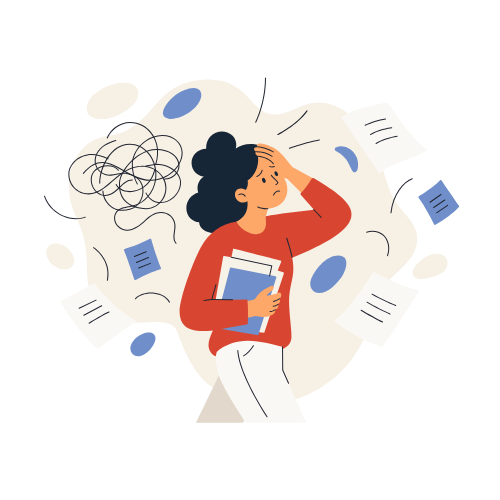
The Impact of Sleep Deprivation
Sleep loss takes a toll on our thoughts and emotions. It impacts attention, memory and our executive skills, making it harder to focus and complete tasks. Poor sleep reduces activity in brain areas tied to self-regulation and impulse control. Hyperactivity and impulsivity increase interfering with daily life. We make more mistakes, have a slower reaction time, interrupt more, have trouble following directions, forget appointments and in general are less motivated!
Brain Chemicals Play a Role
ADHD involves the irregular activity of brain chemicals such as dopamine and norepinephrine. These chemicals help to regulate attention, alertness and the sleep-wake cycle. When levels are too low, falling asleep, or sleep onset is delayed and contributes to poor sleep quality. Reduced dopamine makes it harder to wind down at night, making it more difficult to wake up.

What can we do?
Diaphragmatic breathing, or deep abdominal breathing can calm the body and the mind. We do this quite naturally lying down. Put a hand on your abdominal area and watch it rise and fall. If you are anxious, breathe in for 3 counts and exhale for 6 counts, this will be calming.
Progressive Relaxation: Progressive muscle relaxation is a technique created by a physician in the 1920’s, with the idea that physical relaxation calms the body and the mind, getting us out of fight or flight state and into a rest and digest state. PMR involves tensing specific muscle groups starting at the bottom of the body. For example, you tense a foot for 4-10 seconds while inhaling, then release the tension while exhaling.
Brown Noise: Brown noise is extremely powerful for people with ADHD. (if it works for you!) It helps with falling asleep and staying asleep. You can pull this up on YouTube.
Lavender Scent: The scent of lavender is calming. You can spray it on a pillow or use a diffuser with oil at bedtime.
Magnesium: Magnesium, often taken with calcium, is a dietary mineral that many find calming, as well as being a muscle relaxer. You can rub magnesium lotion or oil on your feet or take a bath in Epsom Salts, which is said to raise magnesium levels significantly. Allow enough time before bed, as your body temperature will rise first (from warmth) and then fall with cooling, said to aid in falling asleep. The Calm product, carried by most supermarkets is a powder that can even be carried in a water bottle by day. Check with your primary care provider to see if magnesium might work for you!
The Calm App: The Calm app has many stories you can follow to fall asleep as well as a wealth of sounds that can help with sleep onset. I am thinking of a client who had great success falling asleep while listening to the sounds of a Parisian Café!
The Alarmy App: The Alarmy app asks you to choose a mission that shuts off the alarm upon completion. A mission might be adding 2+2=4 to silence the alarm. Another mission might be taking a picture of an object like your coffee pot and pointing the picture at the pot to shut off the alarm. The power of the app is that it gets you out of bed and on your feet in order to silence the alarm.
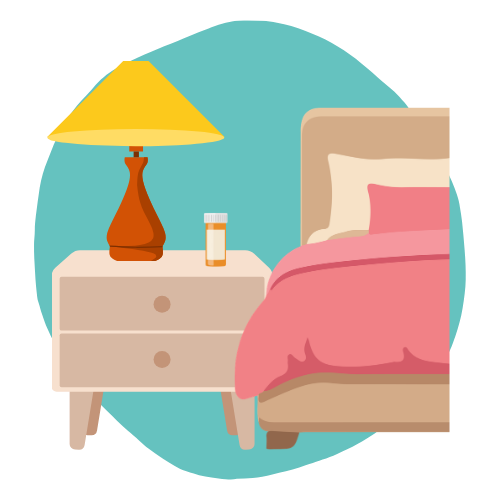
Keep Meds by the Bed: Keep your medication by the bed along with a bottle of water. When the alarm rings, take your meds and hit snooze. By the time it rings again, your ADHD meds will already be at work, making it easier to get going.
The Peaceful Progression Alarm Clock: This alarm clock gets brighter and brighter gradually, simulating natural light to help you wake up. You can find several options on Amazon.
Use a Lightbox: The use of a lightbox of 10,000 lux in the morning can be powerful. It simulates the natural light that we experience more of in the Spring and Summer and less of in the Fall and Winter. Research shows that a lightbox helps with anxiety, depression and the release of melatonin at night, which supports sleep onset. It also can have an impact on ADHD symptoms. You can find lightboxes of all shapes, sizes and costs at Amazon.
*Caution: Lightbox use is NOT recommended for certain disorders such as bipolar, very severe depression or certain specific medications. Be sure to check with your mental health provider before lightbox use.
Check for a Sleep-Disorder: If you snore or wake up a great deal during the night, you might have a sleep disorder. Testing for Sleep Apnea, for example, is as simple as doing an at home test. Make an appointment with a sleep specialist, your general practitioner or a pulmonologist, who can order a sleep study for you. If you have a sleep disorder, it is like having ADHD times two!
Exercise: Exercise during the daytime hours can be a significant player in aiding sleep. Be sure not to exercise too late at night.
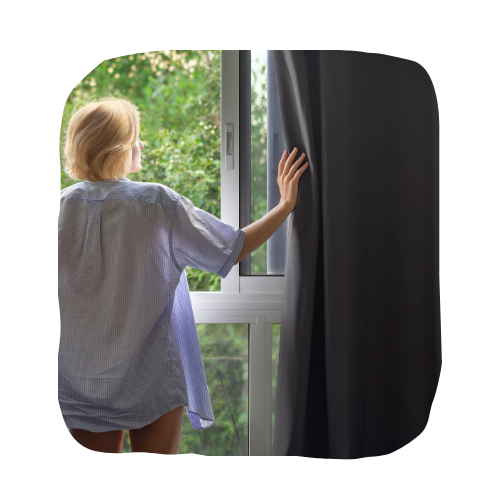
Dark Curtains: Invest in dark curtains, or blackout curtains to keep light out at night.
A Weighted Blanket: If a weighted blanket works for you, it can help to calm and aid in sleep onset. Just because it’s weighted doesn’t mean that it is necessarily hot, as some fear. The weight of the blanket is based on your body weight and should be roughly 10% of your body weight. For more pressure, 1-2 additional pounds can be added. For children, 10% of body weight is recommended, plus 1-2 pounds.
A Calming Night Time Ritual or Routine: Doing things in a certain order, a nighttime routine, gives predictability and you don’t have to over-think. It’s just what you do. Stretching, taking a bath, laying clothes out for the next day, reading, limiting blue light (delays the release of melatonin), or putting the phone in a lock box.
Sleep may never be perfect for those of us with ADHD, but with the right supports in place it can get much better! Be curious and see what works for you!
Ready to get support in creating routines that support sleep? Schedule a FREE complimentary coaching call!
Resources
ADHD and Sleep Problems: Why You’re Always Tired- William Dodson, MD, https://additudemag.com
Researchers are Starting to See ADHD in a New Sleep Centered Light- Amy Glover, https://www.huffingtonpost.co.uk/
Sleep Issues and ADHD Connection- https://gwinnettlung.com
Why ADHD Can Cause Sleep Insomnia and Sleep Problems (and how to fix it)- https://webmd.com
Associations of Sleep Disturbances with ADHD: Implications for Treatment- Alan Hvolby, pmc.ncbi.nlm.nih.gov
ADHD and Sleep Disorders- www.chadd.org
ADHD and Sleep: Problems and Solutions- https://add.org
Mosaic Weighted Blankets, https://mosaicweightedblankets.com