

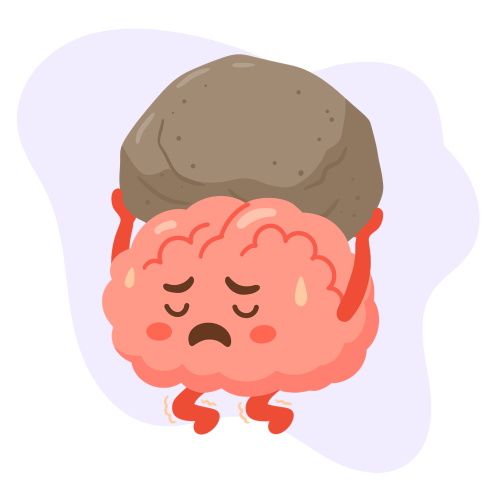
Ever feel like hard things are easy and easy things are hard? You are a perfectionist at heart, but miss some details completely! You may have been frustrated in school by a class that was moving too slowly, or one where you had to do nonsensical busy work that felt like death by a thousand cuts! You may have stared out a window because you had to sit still and weren’t interested anyway. You do ok in your job, but know you are smarter than a friend of yours who makes more than you. You hate meetings with people constantly repeating themselves.
A good day is when you have the time to learn something new. You have multiple unfinished projects but something else always seems to grab your attention. You have great ideas but have trouble making it over the finish line. The sounds in the office are so loud, you can’t even hear yourself think. On top of it, your coworker with the grating voice is complaining loudly again. You are getting more annoyed by the minute and feel ready to explode. If any of these resonate, you might be 2e, or twice exceptional!
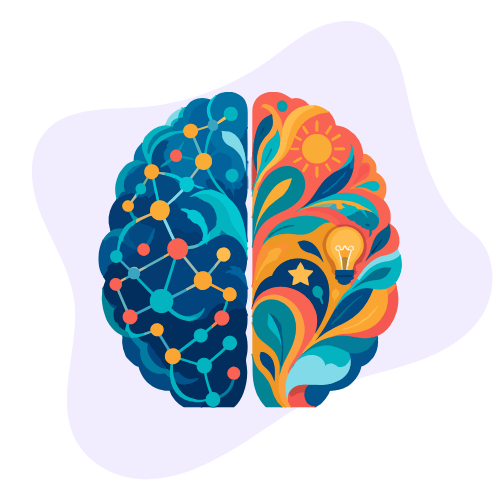
What is twice exceptional?
Twice exceptional refers to a person identified as gifted while at the same time having a challenge in another area, more commonly ADHD or Autism. Both ends of that curve are exceptional. Over the past few years, I have worked with many people who are extremely bright and also have ADHD. When I call a person’s attention to how smart they are, they typically respond with something like this, “How smart can I be? I can’t even get dinner on the table!” or “I can’t even get my receipts turned into work to get paid!” or “I missed the deadline on that project”! These challenges have nothing to do with intelligence, but rather the overall challenges of living with ADHD.
Many areas of life require front of the brain thinking skills, or executive skills. Things like managing a household, organizing your stuff or getting paperwork done in a timely manner. Gifted adults beat themselves up because they recognize the gap, and for them the gap is greater. 2e adults live with self-doubt and feel like imposters as their intellectual ability doesn’t often match up with performance.
“Gifted individuals often possess unique cognitive abilities, advanced problem-solving skills with a deep passion for learning. Giftedness has its own challenges when it intersects with ADHD, however. A person may have problems with attention and focus, hyperactivity, executive function challenges, learning disabilities as well as social and emotional challenges.”
- Heather Joppich, PhD.

What are the signs of a gifted person?
Gifted people are bright, which may not show up on an IQ test. They are perfectionists, which often leads to frustration and anxiety. According to Julie Skolnick, who is doing groundbreaking work in the area of 2e adults, 2e individuals experience over excitability in various areas:
Intellectual: The intense desire to learn and take in information as if from a fire hose!
Emotional: Feeling things deeply and experience a wide range of emotion.
Creative: Are creative with imaginations that run free.
Sensual: Might experience Sensory Processing Disorder, a condition where the brain has difficulty organizing, interpreting and responding to signals from the senses. An individual might be a sensory seeker or a sensory avoider.
Motor: Have a strong need to move to learn.
Most of all, gifted individuals are asynchronous. This means they may have super powers in some areas while other areas might be average or prove challenging, such as planning, organizing, memorizing or having a slower processing speed.
“Imagine someone with intellectual abilities at 98% performing at 50% on a task requiring executive function.”
- Kathleen Nadeau
Gifted with ADHD
For smart people with ADHD, poor executive functioning skills create a huge performance gap. While high intelligence lets you understand complex concepts easily, ADHD impairs the brain’s operating system, causing problems in areas such as planning, memory and task initiation.
“You know you can create something amazing-but sometimes knowing that means you end up creating nothing at all.”
- www.adept.com
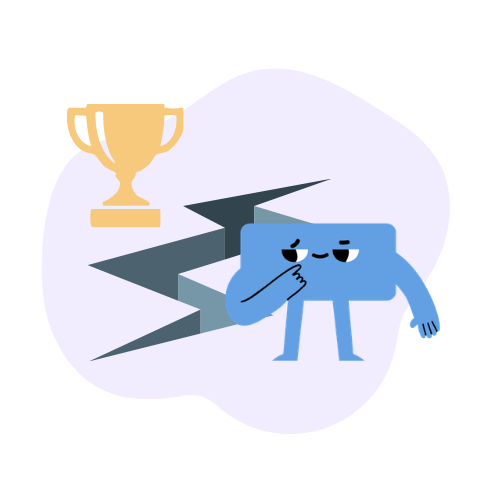
The Gap
You know what to do to solve a problem, but you struggle to break down the steps and to execute them.
You have been able to hide your ADHD symptoms because you’re smart. Until the demands exceed your ability to cope.
Your memory might not pass muster and your processing speed may be slow, however those less bright have a greater daily output.
Underperforming has led to burnout, anxiety or being labeled lazy.
You experience the combination of a high intellect and executive skills deficits. You have amazing intellectual ability, but have problems getting over the finish line.
You have a high standard for yourself, but experience task paralysis, fueled by perfectionism, procrastination and an inconsistent output.
You have heightened sensitivity and empathy, but also trouble regulating intense emotion, experience low frustration tolerance, and as well as the pain of real or perceived rejection.
“High intelligence and professional success will not protect a person from ADHD. Sometimes it makes it harder for others to see the struggle behind the scenes.”
- Kathleen Nadeau
Assumptions are frequently made. People know a person is very smart so therefore they couldn’t possibly have ADHD. ADHD is not an intelligence-deficit, it’s a performance deficit. Others doubt us and we doubt ourselves.
Most importantly, it can prevent us from getting a diagnosis and the help that we need.
I worked with a young college woman who was extremely bright. It took her hours and hours to complete homework, far longer than her peers. After doing psycho-educational testing, it was found that though she was highly intelligent, she also had extreme deficits in short-term memory. Given specific supports, she went on to experience success in her academic life.
The real question is this: “Is this person functioning below where you would expect given their intellectual abilities?”

Closing the 2e Gap
Seek out a Psycho-Educational Evaluation from a Psychologist. You will feel affirmed by discovering your strength areas as well as gaining ideas and resources for managing areas of challenge. Reaching out for help is the bravest thing a person can do.
Seek outlets for stimulation and intellectual growth. Combat boredom.
Seek ADHD Coaching. An ADHD coach can support you in problem-solving the challenges of daily living with ADHD. You will see where ADHD is showing up in your life and learn what to do about it. You create an ADHD toolbox with skills that are transferrable, as well as learn to leverage your strengths against the challenges of ADHD.
Join a 2e community where you can connect with others who “get it”. Such a group can be found at Julie Skolnick’s 2e website, www.withunderstandingcomescalm.com
Follow and develop your strengths. Do what you do best and get help for the rest.
Neurological differences like ADHD and giftedness are variations of the human brain. We can learn different ways to do things that reflect our unique brain wiring and drop the masking, overcompensating and shame.
Reaching out for support in areas of challenge is a must. Shore up those areas of underperformance and close the gap!
Schedule a complimentary coaching call for partnership in closing the gap!
“Forgive yourself for what you didn’t know before you learned it.”
- Maya Angelou
“It’s never too late to be who you were meant to be.”- George Elliot
Resources
Always Bright and Often Bewildering: Twice Exceptional Adults with ADHD, www.adept.org
Gifted and Distractible- Julie F. Skolnick, MA, JD, www.amazoncom
Julie Skolnick website: parent, adult and educator toolbox as well as online groups, www.withunderstandingcomescalm.com
What Does it Mean to be a 2e Adult? - YouTube, Creative Mind Videos, Julie Skolnick
You Can’t Possibly Have ADHD (article) - Kathleen Nadeau, PhD, https://www.linkedin.com/pulse/you-cant-possibly-have-adhd-kathleen-nadeau-phd-kfvne/
Twice Exceptional Adults: Telling Real Ability from Real Support Needs- Chris Hanson, https://lifeskillsadvocate.com/blog/twice-exceptional-adults/