
Get Into Action the ADHD Friendly Way with Structure, Brevity and Variety

There are three words that can fast track any task: structure, brevity and variety. In fact, they reflect our neurology with ADHD! We are not talking about tasks we enjoy, where we can hyperfocus for hours on end, but rather the more boring, tedious tasks that come with everyday life. We get lost in our heads, lack awareness and bounce from thing to thing, leaving tasks undone. We are frustrated by routines and structures that we can’t stick to. Traditional structure has failed us!

Structure: Why We Need it
People with ADHD lack an internal sense of structure due to the challenges of the brain’s management system. We may resist planning because it doesn’t come easily. Due to this struggle with internal structure, it is important that we externalize it. For example, having visuals that cue us, alarms that ring, a launch pad, a spot for our keys or using a whiteboard for dates and reminders that trigger memory.
Externalize structure by creating cues that you can see, hear or feel.
A flexible structure helps us start the day the same way, without having to over-think. According to Caroline McGuire, people with ADHD actually thrive with structure. She goes on to say that structure is a framework that props us up and keeps the day from collapsing. We spend less time in indecision, build tiny habits that we can trust and rely on systems, not will power.
A routine keeps us from overthinking and allows us to run on automatic pilot. It helps to start small with one portion of the day.
Externalize structure by making it visual, auditory or kinesthetic. It could be a post it note, a list, your schedule in a planner, a launch pad by your front door or reminders written on your bathroom mirror that you can SEE. If you are auditory, you might ask Alexa for a reminder or set an alarm on your phone that you can HEAR. You may want to FEEL a reminder if you are kinesthetic, by setting your phone to vibrate. Having a system in place ensures success, rather than trying to rely on memory.
A plan for the day narrows focus by keeping some things in, and other things out. It is a boundary that lifts off pressure, limits endless possibilities and helps to prioritize. Both writing down your plan and reviewing it is equally important, either in the morning or the evening. Russell Barkley, PhD calls this mentally rehearsing.
Brevity: Why We Need it
Due to procrastination and ADHD paralysis, we often put off tasks. Deadlines loom, we get overwhelmed and anxiety kicks in. We can be all or nothing thinkers, without much in between. After doing a dreaded task that takes hours, we burn out and never want to do it again! Short time frames reduce cognitive drain and are brain friendly.
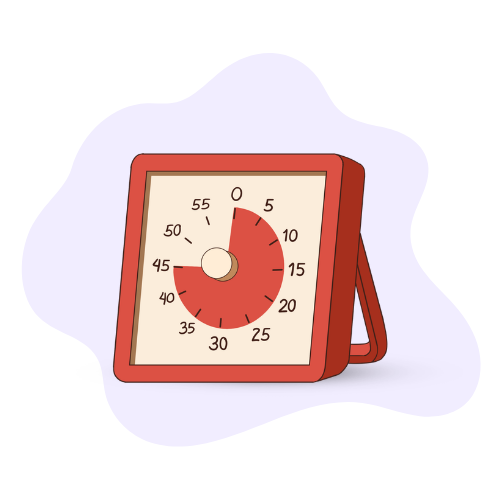
Keeping it brief works because it counteracts overwhelm, gets to the point and helps us to maintain focus. Fly Lady has a timer that says, “I can do anything for 15 minutes.”
Setting a timer gets us into action because it sets us up against a deadline. It creates urgency. The task has a beginning and an end.
Small consistent steps lead to progress and task completion, verses a big push and poor follow through. Small incremental steps lead to big gains!
Plan a reward after the task, it will pull you forward. You begin to associate the reinforcement (the reward) with the torturous task.
Variety: Why We Need it
The ADHD brain is always looking for stimulation. This is due to lower levels of the brain chemical dopamine. We constantly seek novelty to feel engaged, motivated and focused. Dopamine boosts help alleviate boredom and executive functioning challenges. Variety prevents burnout by adding “juice” to routines and structure. Interest equals focus!
Switch tasks or rotate between projects. Alternate between demanding tasks that are more cognitive in nature, with ones that are more routine or physical.
Fidget to add novelty and sharpen focus. According to John Ratey, MD, fidgeting adds stimulation and raises two brain chemicals: dopamine and norepinephrine, in much the same way that ADHD medications do, adding focus and attention.
Change location to add variety to the task at hand. You may like to work in your car, a park, or a coffee shop, especially important for tasks that are less than exciting.
Listen to a recorded class or novel so that you can move around at the same time. The moving brain is the working brain.
Plan new things, the novelty will be energizing!
Discover the power of Structure, Brevity and Variety. You have always worked hard, now it’s time to work differently and in a way that resonates with your unique brain wiring! Cross over the finish line with structure, brevity and variety and experience success with ADHD!
Schedule a FREE consultation to learn more and leverage the power of your unique brain wiring.
“ADHD often feels like living with two competing operating instructions, an insatiable pull toward novelty and stimulation, and an equally urgent need for predictable routines to avoid life sliding into disarray. This tension isn’t a character flaw, it reflects the brain’s reward circuitry and the limits of its executive functioning bandwidth. Novelty is the ADHD brain’s spark plug!”
- JK Hamilton
Resources
The Science of ADHD and Creativity- Katie Mamiron, www.getinflow.io
Why ADHD Minds Thrive on Variety- https://adhdlife.works
The Brain-Body Connection: How Fidgeting Sharpens Focus- Roland Rotz, MD and Sarah Wright, www.additudemag.com
Predictable Chaos: Why ADHD Brains Crave Novelty but Need Routine- JK Hamilton, www.medium.com
Spark (book)- John Ratey, MD, www.amazon.com
FLYLADY (organizational website)- www.flylady.net